
Top 10 Tips To Assess The Quality Of Data And Its Sources For Ai-Powered Stock Analysis/Predicting Trading Platforms
To ensure accurate and reliable insights, it is essential to evaluate the accuracy of the data sources and AI-driven platforms for trading stocks. Poor data quality can lead to flawed predictions, financial losses, and mistrust on the platform. Here are 10 top methods to evaluate the quality of data and sources:
1. Verify the source of data
Check the source of the data. Verify that the platform uses well-known and reputable data providers, such as Bloomberg, Reuters or Morningstar.
Transparency. A platform that is transparent must be able to disclose all sources of its data and ensure that they are kept up-to-date.
Avoid single source dependency Most reliable platforms combine data from many sources to reduce biases.
2. Check the Quality of Data
Real-time data vs. delayed data: Decide whether the platform is providing real-time data or delayed data. The availability of real-time data is essential for trading that is active. The delay data is enough for long-term analysis.
Update frequency: Check how often the information is updated (e.g., minute-by-minute, daily, hourly).
Data accuracy in the past Be sure the information is accurate and constant.
3. Evaluate Data Completeness
Find out if there is missing or incorrect information.
Coverage: Check that the trading platform supports many indexes and stocks that are pertinent to your plan.
Corporate actions – Verify whether the platform accounts stock splits. dividends. mergers.
4. Test Data Accuracy
Cross-verify data: Compare the data of the platform with other reliable sources to ensure consistency.
Error detection – Search for outliers, incorrect values or financial indicators that are not in line with.
Backtesting using historical data to back-test trading strategies to see if results match expectations.
5. Examine the Data Granularity
Level of detail: Ensure the platform provides granular data like intraday prices volumes bid-ask spreads, as well as the depth of an order book.
Financial metrics: Make sure the platform provides complete financial statements, such as the balance sheet, income statement and cash flow. Also, make sure it has key ratios such as P/E (P/B), ROE (return on equity) etc. ).
6. Make sure that Data Cleaning is checked and Processing
Data normalization – Ensure that the platform normalizes your data (e.g. making adjustments for splits or dividends). This helps ensure the consistency.
Outlier handling – Check how the platform handles anomalies and outliers.
Missing data imputation – Check that the platform is using reliable methods to fill out missing data points.
7. Verify data consistency
Timezone alignment – Ensure that all data are aligned with the local time zone in order to avoid any discrepancies.
Format consistency: Make sure the data is formatted consistently.
Cross-market compatibility: Ensure that the information coming from different markets and exchanges are in sync.
8. Relevance of Data
Relevance in trading strategy. Ensure that the data aligns to your trading style.
Explore the features on the platform.
9. Examine Data Security and Integrity
Data encryption: Ensure that the platform has encryption in place to protect the data while it is being transmitted and stored.
Tamper-proofing : Ensure that the data has not been manipulated by the platform.
Check for compliance: The platform should comply with the laws on data protection.
10. Check out the AI model on the platform Transparency
Explainability. Make sure you can understand how the AI makes use of data to make predictions.
Bias detection: Verify if the platform actively monitors and reduces biases in the models or data.
Performance metrics: Examine the history of the platform as well as performance metrics (e.g. accuracy and precision, recall) to evaluate the validity of its predictions.
Bonus Tips:
Reputation and reviews of users Review the feedback of users and reviews in order to evaluate the platform reliability and data quality.
Trial period. You can use a free demo or trial to test out the software and its features.
Support for customers: Ensure that your platform has a robust support for data-related problems.
By following these guidelines, you to assess the quality, source, and accuracy of stock prediction systems based on AI. Take a look at the top rated chart ai trading assistant hints for more examples including market ai, AI stock, ai investment app, market ai, ai for trading, ai for trading, options ai, stock ai, options ai, ai chart analysis and more.
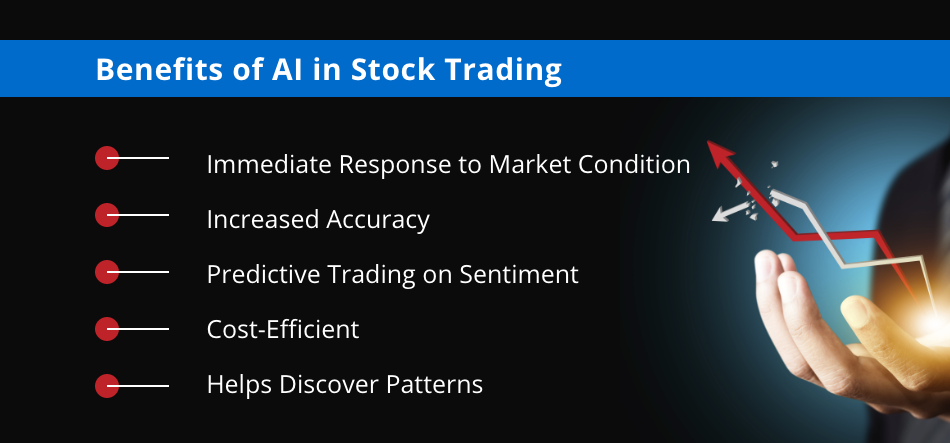
Top 10 Ways To Evaluate The Educational Resources Of AI stock-Predicting/Analyzing Trading Platforms
Users must evaluate the educational material provided by AI trading and stock prediction platforms in order to fully understand the platform and the way it operates in order to make informed trading choices. Here are 10 tips to evaluate the quality and worth of these sources.
1. The most comprehensive tutorials and guides
Tips: Check whether there are tutorials or user guides for both beginners and advanced users.
Why is that clear instructions are helpful for users to navigate the platform.
2. Webinars and Video Demos
Check out video demonstrations, webinars or live sessions.
Why? Interactive and visually appealing content can help you comprehend complex concepts.
3. Glossary
Tips. Make sure that your platform has a glossary that clarifies key AI- and financial terms.
Why: This helps everyone, but in particular novices to the platform learn the terms.
4. Case Studies and Real-World Examples
TIP: Determine whether the platform has instances of how AI models have been applied in real-world situations.
What's the reason? Practical examples show the power of the platform and aid users connect with its applications.
5. Interactive Learning Tools
Check out interactive tools, like simulators, quizzes or sandboxes.
The reason: Interactive tools let users practice and test knowledge without risking any real money.
6. Content is regularly updated
If you are unsure you are, make sure to check the educational materials are updated frequently in response to changes in trends, features, or rules.
Why: Outdated data can lead to misinterpretations or incorrect usage of the platform.
7. Community Forums and Support with
TIP: Find active forums for community members or support groups where users can post questions and exchange ideas.
The reason is peer assistance, expert advice and help from peers can enhance learning.
8. Programs that offer certification or accreditation
Find out if the platform offers accreditation and certification programs.
The reason recognition of formal education improves credibility and motivate users to increase their knowledge.
9. Accessibility and user-friendliness
Tip: Find out the ease with which you can access and use the educational materials (e.g. mobile-friendly or printable PDFs).
Why? Easy access allows users to study at their own pace.
10. Feedback Mechanisms for Educational Materials
Tips – Make sure you can give feedback to the platform about the educational materials.
What is the reason: Feedback from users helps improve the relevance and quality of the resource.
Bonus Tip: Various Learning Formats
Make sure the platform provides various learning formats (e.g. text, video, audio) to meet the needs of different learning styles.
It is possible to evaluate these aspects to determine whether the AI trading and stock prediction platform offers robust educational resources, which can help you maximize the potential of it and make informed trading decision-making. See the most popular best ai trading platform info for site recommendations including ai share trading, best AI stocks to buy now, chart analysis ai, ai for trading stocks, stock trading ai, chart ai trading, chart analysis ai, best ai trading platform, can ai predict stock market, ai investment tools and more.
